
What’s So Special About Lions Mane?
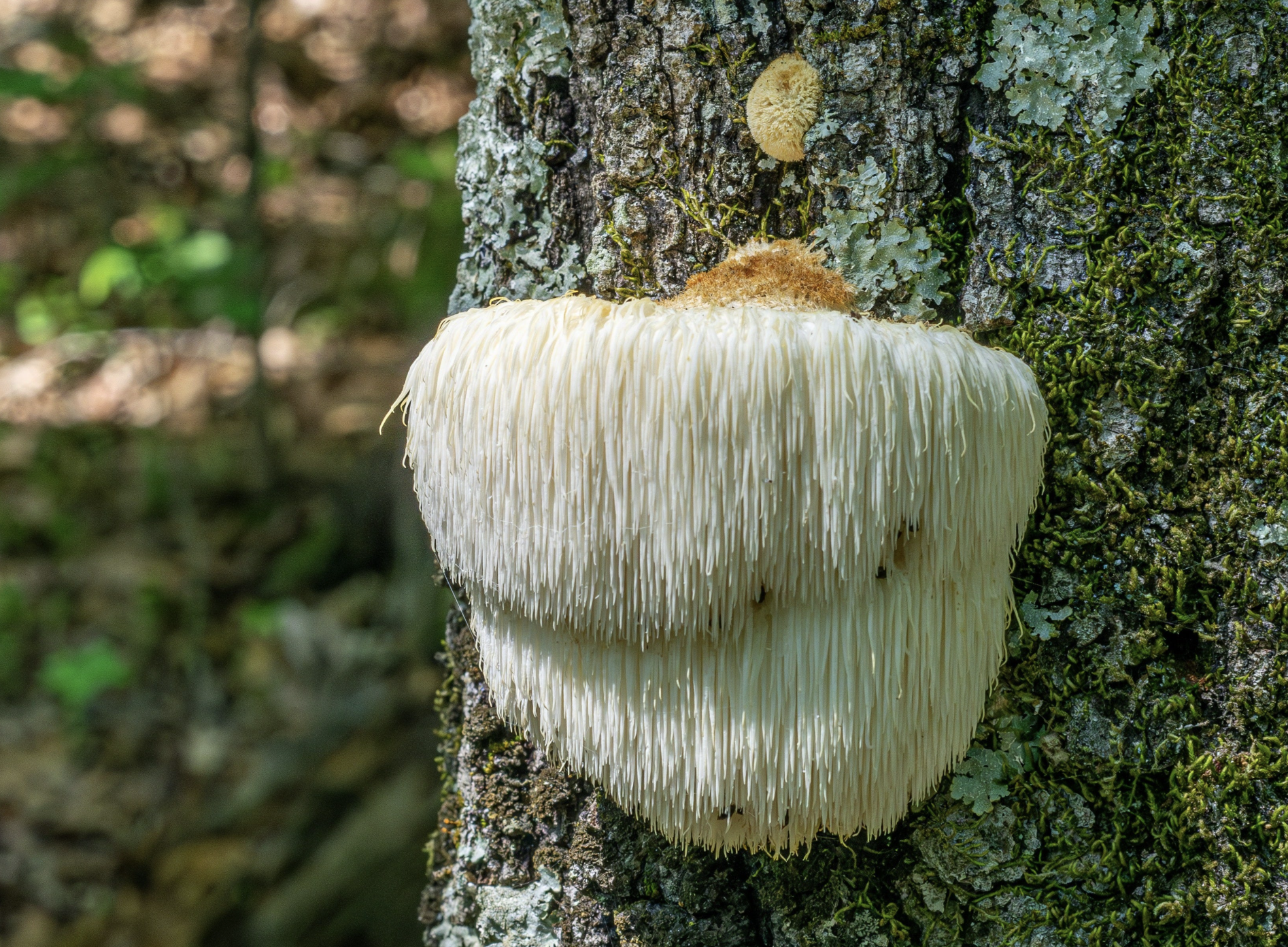
If you’ve spent any time in the wellness world lately, you’ve probably heard of Lion’s Mane.It’s showing up in coffees, powders, capsules, and supplements promising everything from better focus to improved memory. But Lion’s Mane isn’t a new wellness trend. It’s an edible mushroom with a long history of culinary and traditional use, and today scientists are studying some of the same properties that have made it interesting for generations.So this week, we wanted to get past the marketing and take a look at the question ourselves:What does the research actually say about Lion’s Mane?
First, What Is Lion’s Mane?
Lion’s Mane (Hericium erinaceus) is one of the most recognizable gourmet mushrooms out there. Instead of the traditional cap and stem, it grows in clusters of long white spines, giving it the shaggy appearance that inspired its name.And despite all the attention it gets as a supplement, Lion’s Mane is also simply food.Fresh Lion’s Mane has a tender, meaty texture and mild flavor that many people compare to crab or lobster. It can be sliced, torn, sautéed, roasted, or used as a meat alternative in recipes.But what has really captured researchers’ attention is what’s happening beyond the dinner plate.
🧠 The Research on Memory & Cognitive Function
One of the most interesting areas of Lion’s Mane research is brain health.In a small randomized, double-blind, placebo-controlled trial, researchers studied 30 adults between 50 and 80 years old with mild cognitive impairment. Participants who consumed Lion’s Mane for 16 weeks showed significantly higher cognitive-function scores at several points during the study compared with the placebo group.Interestingly, after participants stopped taking Lion’s Mane, their scores declined again, suggesting that any effect may depend on continued consumption.Another pilot clinical trial studied an erinacine A-enriched Lion’s Mane preparation in people with mild Alzheimer’s disease for 49 weeks. Researchers reported differences favoring the Lion’s Mane group on several measures of cognition and daily functioning. This was a small pilot study using a specialized mycelium preparation, so it does not mean eating Lion’s Mane has been proven to prevent or treat Alzheimer’s disease. But it gives researchers another reason to investigate the mushroom further.
🌱 What About Healthy People?
This is where things get especially interesting, and a little more complicated.A 2023 randomized, double-blind pilot study followed 41 healthy adults ages 18–45. After a single dose of Lion’s Mane, participants were faster on one cognitive task. After 28 days, researchers also observed a trend toward lower subjective stress.However, the researchers emphasized that the study was small and produced some null and limited negative findings as well. In other words: promising, but far from settled science.Another study involving 24 college-aged adults found no improvement in cognition after four weeks of Lion’s Mane compared with placebo.That’s important.Science rarely gives us a simple “this works” or “this doesn’t.” Different preparations, amounts, study populations, and lengths of treatment can produce different results. Right now, we have intriguing evidence, not a final answer.
🧬 Why Are Scientists So Interested in It?
Part of the excitement surrounding Lion’s Mane comes from compounds found in the mushroom, including hericenones and erinacines.Researchers are studying these compounds for their potential neurotrophic effects—their relationship with processes involved in the growth, maintenance, and function of nerve cells.A lot of this work has taken place in cells and animals rather than humans, which is an important distinction. A biological effect in a laboratory doesn’t automatically translate into a health benefit from eating the mushroom.But these mechanisms help explain why Lion’s Mane continues to attract so much scientific interest.
🌿 Mood & Stress
Brain health isn’t the only area being explored.A small randomized study involving 30 women examined Lion’s Mane consumption for four weeks. Researchers found improvements in some measures related to mood and anxiety compared with placebo, although the results were limited and don’t establish Lion’s Mane as a treatment for anxiety or depression.The 2023 study in healthy young adults also found a near-significant trend toward reduced subjective stress after 28 days.Again, these are small studies. But together, they raise interesting questions about the relationship between Lion’s Mane, the nervous system, cognition, and mood.
🍽️ Supplement vs. Mushroom: There’s a Difference
Here’s something that can easily get lost online.A study using a concentrated extract, standardized supplement, or enriched mycelium product is not necessarily telling us what happens when someone sautés fresh Lion’s Mane for dinner.The Alzheimer’s pilot trial used mycelia specifically enriched with erinacine A. Another recent study administered a concentrated 10:1 fruiting-body extract. Those aren’t equivalent to a serving of fresh mushrooms.That’s why we don’t think Lion’s Mane needs miracle claims to be exciting.It’s an unusual, delicious gourmet mushroom that researchers are actively studying. The science is part of what makes it fascinating, not a reason to promise results the science hasn’t established yet.
🍄 So, Is Lion’s Mane a “Brain Mushroom”?
There’s a reason it earned that reputation.Early human trials suggest potential effects involving cognitive function, while laboratory and animal research has identified compounds that make Lion’s Mane particularly interesting to neuroscience researchers.But larger, longer human trials are still needed. Some studies have found benefits, others haven’t, and many of the claims circulating online go well beyond what current evidence can support.And honestly? We think the real story is more interesting than the hype.A strange white mushroom that tastes great on a skillet also happens to contain compounds scientists are studying for their relationship with the nervous system.That’s pretty incredible all by itself.
Last Week on Fungi Friday 🍕
Last week, we put Lion’s Mane to work in the kitchen with our Lion’s Mane & Oyster Mushroom Pesto Pizza.Its tender, almost seafood-like texture makes it one of our favorite mushrooms to cook with, especially when it’s browned in a skillet before being added to pizza.So whether you’re interested in Lion’s Mane because of the research, its unique appearance, or simply because you want to try something new for dinner, we think it’s a mushroom worth getting to know.See you next Fungi Friday! 🍄This article is for educational purposes only and is not medical advice. Research on Lion’s Mane is ongoing, and the studies discussed here include supplements, extracts, and preparations that are not equivalent to consuming fresh Lion’s Mane mushrooms. Lion’s Mane should not be used to diagnose, prevent, or treat a medical condition.
Research referenced
Mori et al. — Mild Cognitive Impairment Clinical Trial (PubMed)
Docherty et al. — Cognition, Stress & Mood Pilot Study (PubMed)
Li et al. — Early Alzheimer’s Disease Pilot Trial (Frontiers/PMC)